

The proportion of conventional lunch boxes is 70% - 90% sugarcane fiber+10% - 30% bamboo pulp fiber. Different tableware will also adjust the proportion of different fibers according to the shape, angle, hardness and stiffness of the product. Of course, wheat straw, wheat straw, reed and other plant fibers will also be added as needed. It is made of plant fiber without adding chemical materials such as PP and PET.
2. How can the disposable pulp lunch box achieve the effect of water and oil resistance?
A certain amount of food grade additives will be added to the pulp molded lunch box. The general waterproof agent is 1.0% - 2.5%, and the oil repellent agent is 0.5% - 0.8%, so as to achieve the effect of water and oil resistance. The test is generally conducted with water at 100 ℃ and oil at 120 ℃ for 30 minutes; The oil temperature test time can be extended for special requirements.
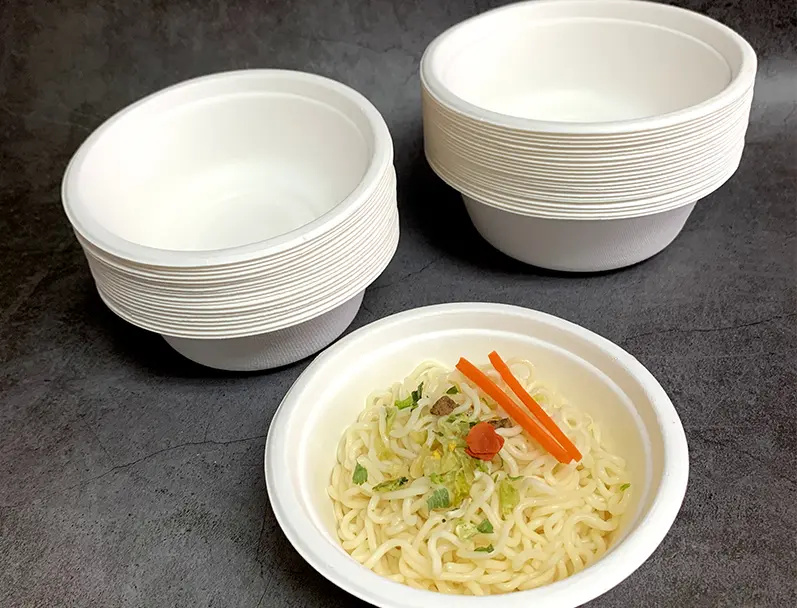
At present, most of the oil repellents in vegetable fiber tableware on the market contain fluoride, and the tableware that is waterproof but not oil repellent does not contain fluoride.
If the degradable tableware is required to be fluorine free, waterproof and oil resistant, the current better alternative is film coating. PBAT is the most widely used composite material in the current pulp molded environment-friendly tableware.
The products covered with film can better preserve the temperature, reduce the heat dissipation through the pores of the molded products, reduce the stickiness of rice, dumplings and other foods, and greatly reduce the use of waterproof agents and oil repellents.
4. How long can environment-friendly pulp tableware be completely degraded?
In the absence of any industrial decomposer, it will take about 45-90 days for the paper pulp molded environment-friendly tableware to be completely decomposed in the natural state of the landfill site. No harmful ingredients will be produced, and no harm will be caused to land organisms, marine corals or marine organisms.
After degradation, 82% of the ingredients are organic matter, which can be used as fertilizer for land use. The materials are natural and return to nature.
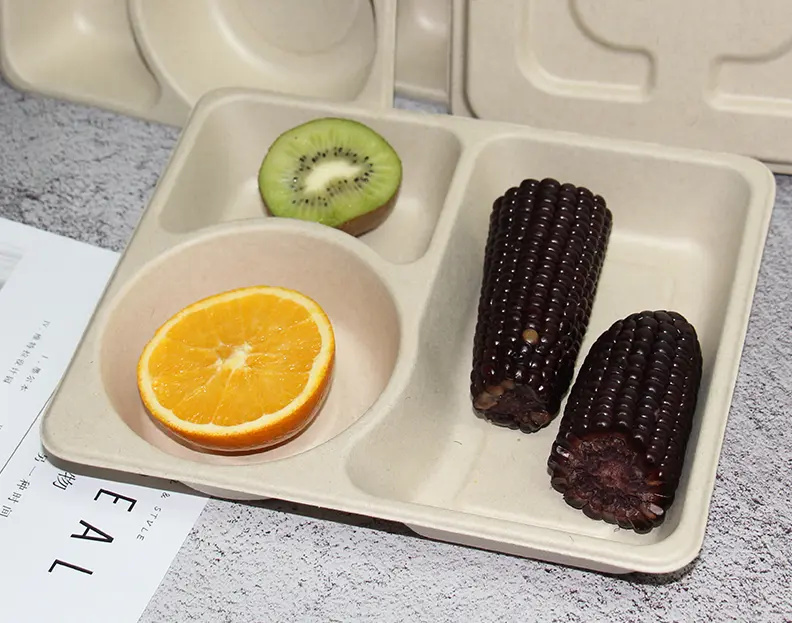
The degradable pulp lunch box can be heated by microwave and baked in an oven without harmful chemicals. The maximum temperature can reach 220 ℃.
It can support refrigerator refrigeration, and the freezing temperature can reach minus 18 ℃.
6. What type of product quality inspection standard does the pulp molded lunch box meet?
The biodegradable vegetable fiber lunch box complies with the national quality inspection standards of Pulp Moulded Tableware, the US Food and Drug Administration (FDA), the German New Food and Dietetic Act (LFGB), and other international standardized inspection standards.
7. Can the biodegradable lunch box be printed with logo?
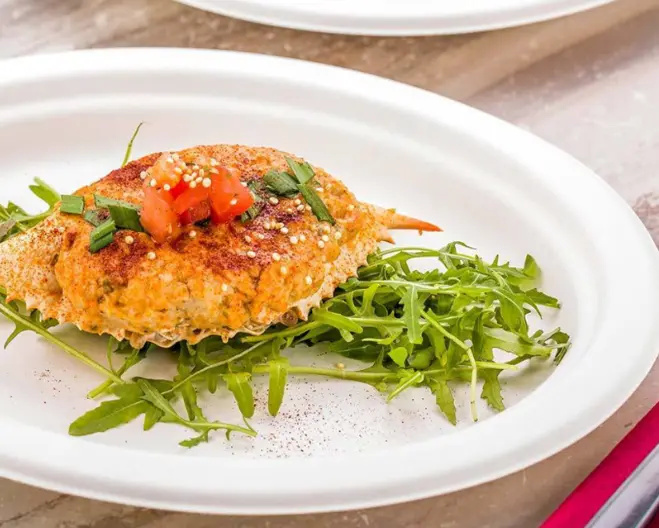
Logo can be printed. The printed products are mostly the circumference, bottom or top of the lunch box products. The cups, bowls and other products are mostly printed on the outside of the products. Curved surface printing is required. According to printing equipment, it can be divided into screen printing, pad printing and laser laser printing (inkjet printing).
Printing products will increase product costs accordingly.
8. Have the raw materials used in white degradable lunch boxes been bleached? What bleach do you use?
Unbleached plant fiber pulp is yellow and hard because it contains a small amount of lignin and colored impurities. Semi bleached pulp contains a large amount of pentosan, which is light yellow, commonly known as natural color. The fiber of bleached pulp is white, pure and soft, but the fiber strength is lower than that of unbleached pulp due to bleaching treatment.
Hydrogen peroxide is generally used as bleaching agent, but chlorine is not allowed!